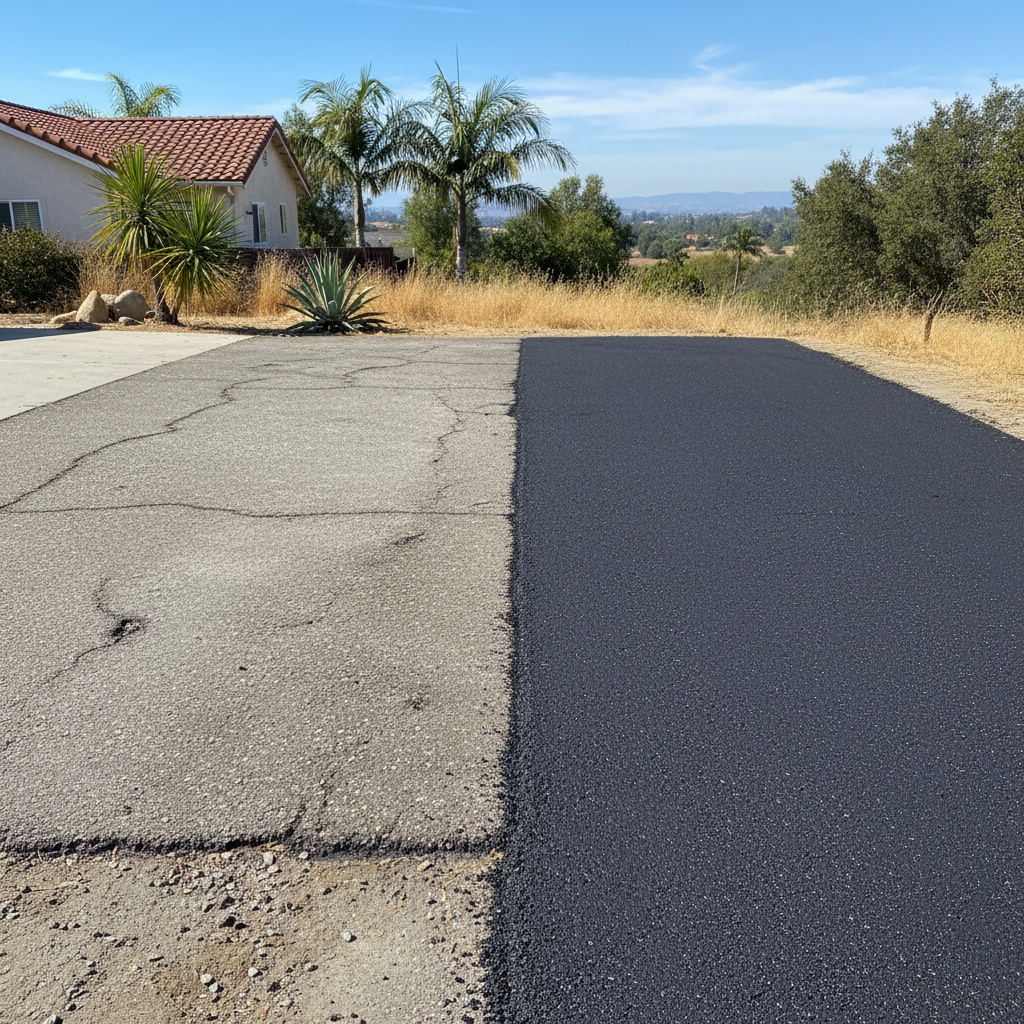
What's the Deal with Asphalt Milling Anyway?
So, your asphalt driveway's seen better days, huh? Cracks, potholes, maybe it's just looking tired. Most folks think, "Time for new asphalt!" and jump straight to repaving. But if you want a job that lasts, you really should be thinking about milling first. It's basically grinding off the old, worn-out surface before laying down new stuff. You wouldn't build a new house on a shaky foundation, right? Same principle here.
When we talk about milling for residential driveways, especially here in Los Angeles, you've got two main approaches: full-depth and partial-depth. Each has its place, and knowing the difference can save you a headache and a lot of money down the line.
Partial-Depth Milling: The Surface Refresh
Let's start with partial-depth milling. This is exactly what it sounds like – we're only grinding off the top layer of your existing asphalt. Think of it like giving your driveway a really good shave. We're usually talking about removing anywhere from 1 to 3 inches of the surface. The goal here is to get rid of the most damaged part – the cracking, rutting, and general wear and tear that's just on top – while keeping the solid base layer underneath intact.
Cost
This is usually the more budget-friendly option upfront. Since we're not digging as deep, there's less material to remove and less new asphalt needed to bring it back up to grade. For a typical residential driveway in, say, the San Fernando Valley, this can make a significant difference in the initial quote.
Durability
Partial-depth milling works great if your underlying base is still solid. If the problems are mostly superficial, like alligator cracking that hasn't gone all the way through, then removing that top layer and putting down fresh asphalt can give you a really durable surface. It bonds well to the existing, stable asphalt beneath. However, if there are deeper structural issues, like major subgrade failure or widespread fatigue cracking, this approach is just putting a band-aid on a bigger problem. It won't last as long because the underlying issue will eventually show through again.
Maintenance
Maintenance is pretty standard for any asphalt surface: sealcoating every few years, fixing minor cracks promptly. If the milling was done correctly over a good base, you shouldn't have any unusual maintenance needs.
Appearance
Once we lay down new asphalt, it'll look fantastic – smooth, black, and fresh. You won't see any ghosting of the old cracks if the milling was deep enough to remove them.
Full-Depth Milling: The Complete Overhaul
Now, full-depth milling is a different beast. This is when we grind down through the entire asphalt layer, all the way to the aggregate base underneath. Sometimes, we even go a little into the base itself if it's compromised. We're essentially removing all the old asphalt, leaving you with a fresh, stable foundation to build on.
Cost
This is going to be more expensive, no two ways about it. You're removing more material, and you're replacing the entire asphalt structure. It's a bigger job, takes more time, and requires more new asphalt. But think of it as an investment.
Durability
This is where full-depth milling shines, especially in places like Los Angeles where we get that intense summer sun and occasional heavy rains that can really mess with subgrades. If your driveway has deep, structural problems – like significant heaving, massive potholes that keep coming back, or a base that's clearly failed – then full-depth milling is the only way to get a truly long-lasting solution. You're essentially rebuilding the pavement from the ground up (or, rather, from the base up). Pioneer Asphalt Co. always recommends this when the integrity of the entire structure is compromised.
Maintenance
With a brand new, properly constructed asphalt layer over a stable base, your maintenance should be minimal for years to come. You're starting fresh, so you're less likely to deal with recurring issues that stem from an old, failing foundation.
Appearance
Just like partial-depth, a new asphalt surface looks great. But with full-depth, you have the added confidence that the beauty isn't just skin deep; it's built on a solid foundation that will hold up.
My Recommendation for LA Homeowners
Alright, so which one should you choose for your home here in Southern California? It really boils down to the condition of your existing driveway's foundation.
If your driveway is relatively new (say, less than 10-15 years old) and the damage is mostly surface-level – fine cracks, some minor rutting, fading – then partial-depth milling is likely your best bet. It's cost-effective and will give you a beautiful, durable surface that should last for many years, provided the base underneath is still sound.
However, if your driveway is old, has significant potholes that reappear even after patching, shows widespread fatigue cracking (that "alligator skin" look that's deep and extensive), or if you've noticed areas sinking or heaving, then full-depth milling is almost certainly the way to go. I know it's a bigger investment upfront, but trust me, trying to save a buck with a partial repair on a fundamentally failed driveway is just throwing good money after bad. You'll end up paying more in the long run when those problems inevitably resurface, and you have to redo the whole thing anyway.
The best way to know for sure? Get a professional assessment. We can come out, take a look at your specific driveway, and tell you exactly what's going on beneath the surface. Don't guess; get the facts before you make a decision that you'll have to live with for years.