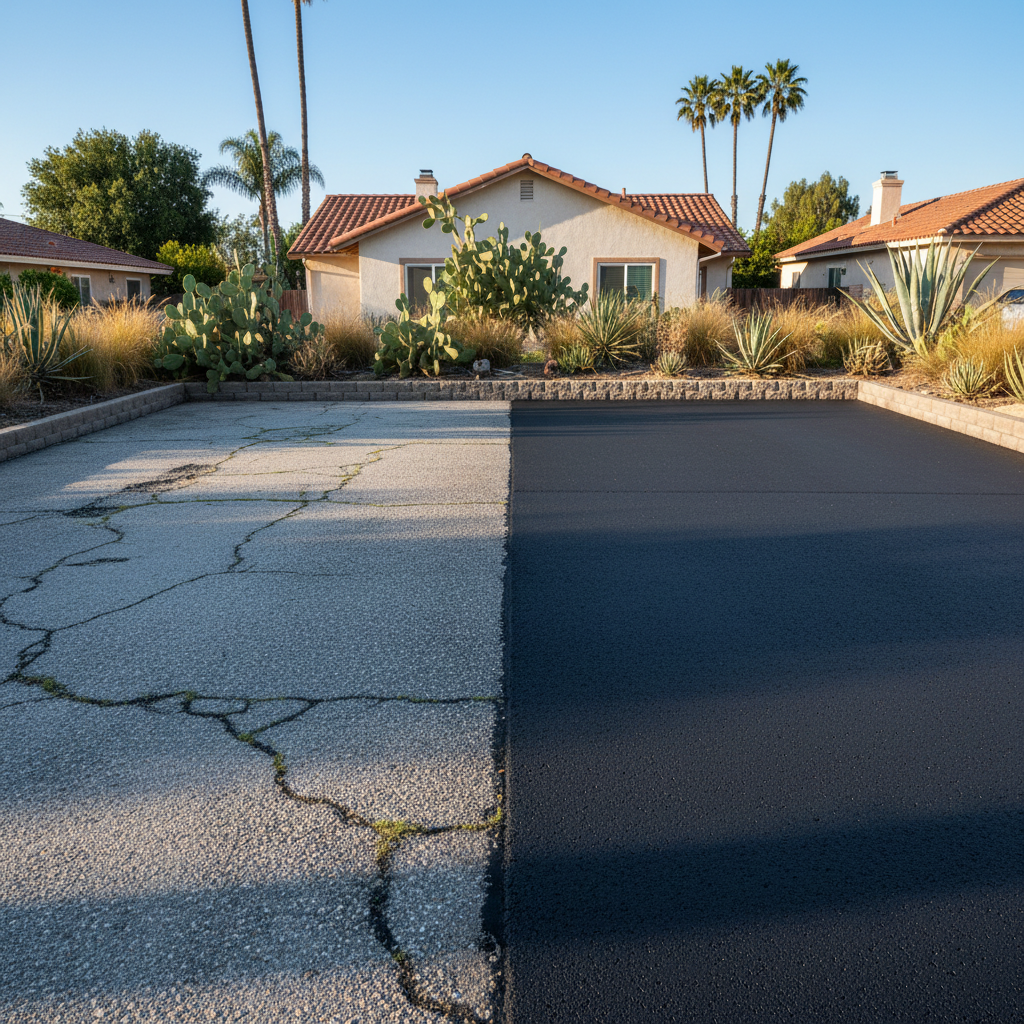
Your driveway's seen better days, hasn't it? Maybe it's got more cracks than a desert floor after a long summer, or it just looks tired and worn out. When folks in places like Los Feliz or Silver Lake are thinking about fixing it up, they often ask me about two main options: can we just put new asphalt over the old stuff, or do we need to rip it all out and start fresh? It's a really good question, and the answer, frankly, depends on what's going on underneath.
What's an Asphalt Overlay?
Think of an asphalt overlay as a thick, new skin for your existing driveway. We're talking about laying a fresh layer of hot-mix asphalt right on top of your current pavement. Before we do that, though, we'll usually clean the surface thoroughly, fill any major cracks, and sometimes put down a tack coat to help the new layer stick. It's kind of like putting a fresh coat of paint on a wall – it'll look great, but if the wall underneath is crumbling, that paint won't fix the structural issues, will it?
What's New Pavement (Full-Depth Reconstruction)?
Now, this is the full meal deal. When you go for new pavement, we're digging everything out, right down to the subgrade. That means taking out all the old asphalt, any damaged base material, and getting down to the dirt. Then, we'll compact the subgrade, lay down a fresh, stable aggregate base, and finally, install multiple layers of new hot-mix asphalt. Essentially, we're building a brand new driveway from the ground up. It's a much more involved process, but it addresses any and all problems below the surface.
Cost: The Upfront Sticker Shock
Let's be honest, cost is usually the first thing on everyone's mind. Generally speaking, an asphalt overlay is going to be less expensive upfront. You're using less material overall, and the labor involved in digging everything up and hauling away debris is significantly reduced. It's a quicker job, which also saves on labor costs. New pavement, on the other hand, is a bigger investment. You're paying for all that excavation, the new base material, and more asphalt. It's a bigger project, and the price tag definitely shows it.
Durability & Lifespan: What's Underneath Matters Most
Here's where the rubber meets the road, literally. An overlay can extend your driveway's life for another 7-15 years, assuming the base underneath is solid. If your existing driveway only has minor surface cracks, fading, or shallow potholes, an overlay can be a fantastic, cost-effective solution. The key here is