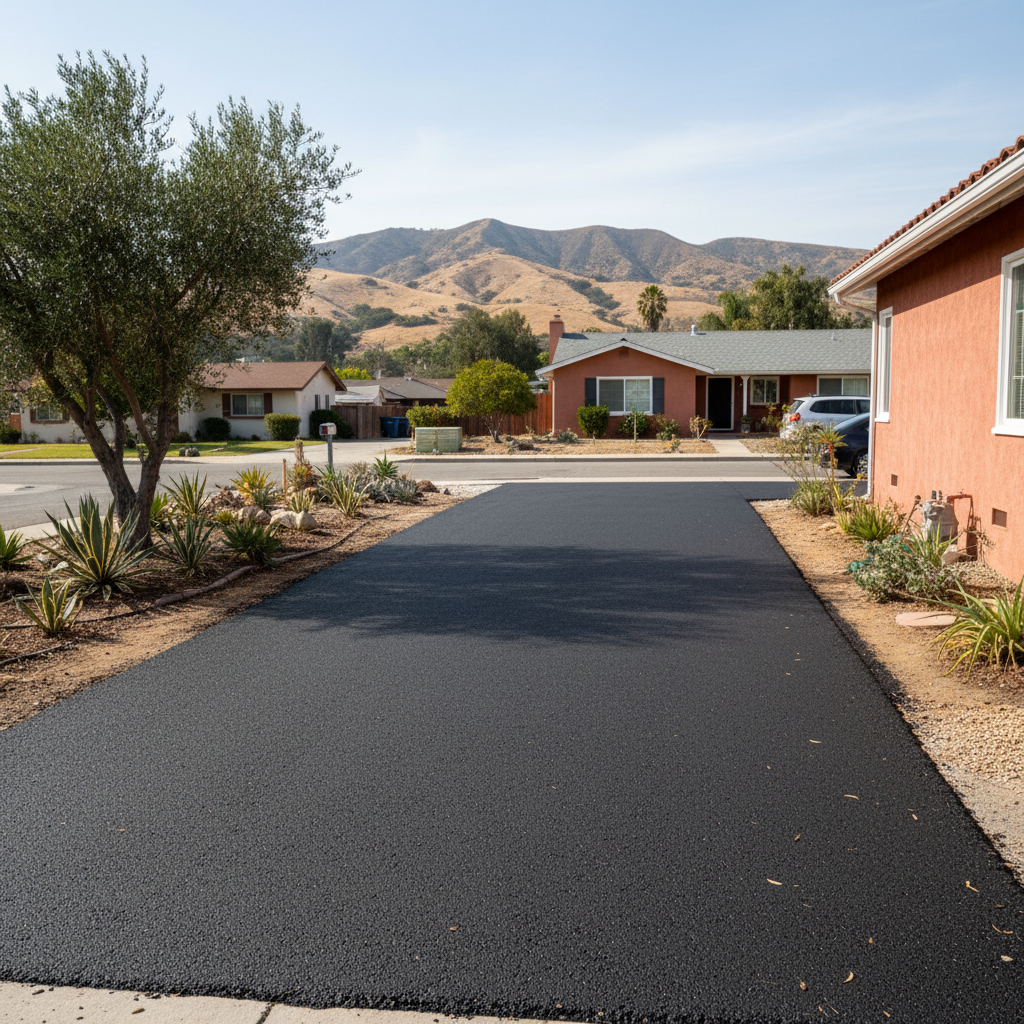
What Really Affects Your Driveway Paving Cost Here in LA?
So, you're looking to get a new driveway, huh? Good move. A solid driveway isn't just about curb appeal; it's about function, safety, and protecting your property. But let's be real, the first thing everyone wants to know is, 'What's this going to set me back?' You've probably heard 'it depends' a million times, and yeah, it does, but I can give you some real numbers and tell you exactly what those factors are, especially here in Los Angeles.
First off, the biggest factor is almost always the material. Are we talking asphalt, concrete, pavers, or something else? Each has its own price point per square foot. Asphalt is generally the most budget-friendly upfront. Concrete is next, and then pavers can get pretty pricey, especially if you're going for something custom or intricate.
Then there's the size and shape of your driveway. This one's a no-brainer, right? A bigger driveway means more material, more labor, and more time. But it's not just square footage. A long, narrow driveway might be easier to pave than a short, wide one with a bunch of curves and turns. Complex shapes mean more cutting, more hand-work, and ultimately, more cost.
Existing conditions are huge. Is this a brand-new install on virgin soil, or are we tearing out an old, cracked concrete slab? Demolition and removal of old material add significant cost. If your existing base is shot, or if we find some nasty surprises like old tree roots or poor drainage issues once we start digging, that's going to add to the bill. Here in LA, especially in some of the older neighborhoods like Silver Lake or Highland Park, you often find driveways that have been patched and repatched for decades, or built on slopes that need extra grading work. That kind of prep work isn't cheap, but it's crucial for a driveway that lasts.
Accessibility also plays a role. Can our big trucks and equipment easily get to your driveway, or are we working in a tight spot with limited access? Think about those narrow streets in Venice or the hills of Hollywood. If we have to haul material by hand or use smaller, specialized equipment, it takes longer and costs more.
Typical Price Ranges for Driveways in LA
Alright, let's talk numbers. These are general ranges for typical residential driveways in Los Angeles, assuming standard preparation and good access. Remember, these are just averages, and your specific project could be higher or lower.
- Asphalt Driveway: You're usually looking at somewhere between $4.00 to $8.00 per square foot. This includes basic excavation, a good aggregate base, and a couple of inches of hot asphalt. For a standard two-car driveway (around 400-500 sq ft), that's roughly $1,600 to $4,000. If you need extensive grading or more complex drainage, it'll be on the higher end.
- Concrete Driveway: Concrete typically runs from $7.00 to $15.00 per square foot. This covers standard gray concrete, 4-inch thickness, and basic rebar reinforcement. Stamped or colored concrete can push that up to $15-$25+ per square foot. For that same 400-500 sq ft driveway, you're looking at $2,800 to $7,500 for basic concrete.
- Paver Driveway: This is where costs really vary, but expect to pay anywhere from $15.00 to $30.00+ per square foot. Pavers require a very stable base, meticulous installation, and the cost of the pavers themselves can be significant. So, for our example driveway, that's $6,000 to $15,000, easily.
These numbers include labor, materials, and basic site prep. They don't usually include things like elaborate drainage systems beyond simple grading, retaining walls, or special permits that might be required by your specific city or county.
What Should Be Included in Your Quote?
When you get a quote from me or any reputable contractor, it should be pretty detailed. Don't settle for a one-liner. Here's what you want to see:
- Scope of Work: A clear description of exactly what's being done. Is it tear-out and replace? Overlay? New installation?
- Materials: What kind of asphalt mix? What PSI concrete? What type of pavers? How thick will the layers be (base, asphalt/concrete)?
- Site Preparation: Details on excavation, grading, and base material. How deep will we dig? What kind of aggregate?
- Drainage: Any specific drainage solutions, like swales or catch basins, should be noted.
- Permits: Who is responsible for pulling any necessary permits? Usually, it's the contractor, but clarify.
- Timeline: A projected start and completion date.
- Warranty: What kind of guarantee do they offer on their work? At Pioneer Asphalt Co, we stand by our driveways.
- Total Cost: The final price, clearly broken down if possible, with no hidden fees.
How to Avoid Overpaying for Your Driveway
Nobody wants to get ripped off, especially on a big home improvement project. Here's my advice:
- Get Multiple Quotes: This is probably the most important thing. Don't just go with the first guy who gives you a number. Get at least three detailed quotes from different, reputable contractors. This helps you compare not just price, but also the proposed scope of work and materials.
- Check References and Reviews: Always, always, always check their past work. Look at online reviews, ask for references, and if possible, drive by some of their completed projects. A good contractor will be happy to provide these.
- Don't Chase the Lowest Bid: The cheapest quote isn't always the best deal. Sometimes, a super low price means they're cutting corners on materials, labor, or not including crucial steps. You'll pay for it later in repairs.
- Understand the Contract: Read every word of the contract before you sign. Make sure everything you discussed is written down. If it's not in the contract, it didn't happen.
- Ask Questions: If you don't understand something, ask! A good contractor will take the time to explain things clearly.
Getting a new driveway is a significant investment. Do your homework, ask the right questions, and choose a contractor you trust. You'll end up with a driveway that serves you well for years to come.