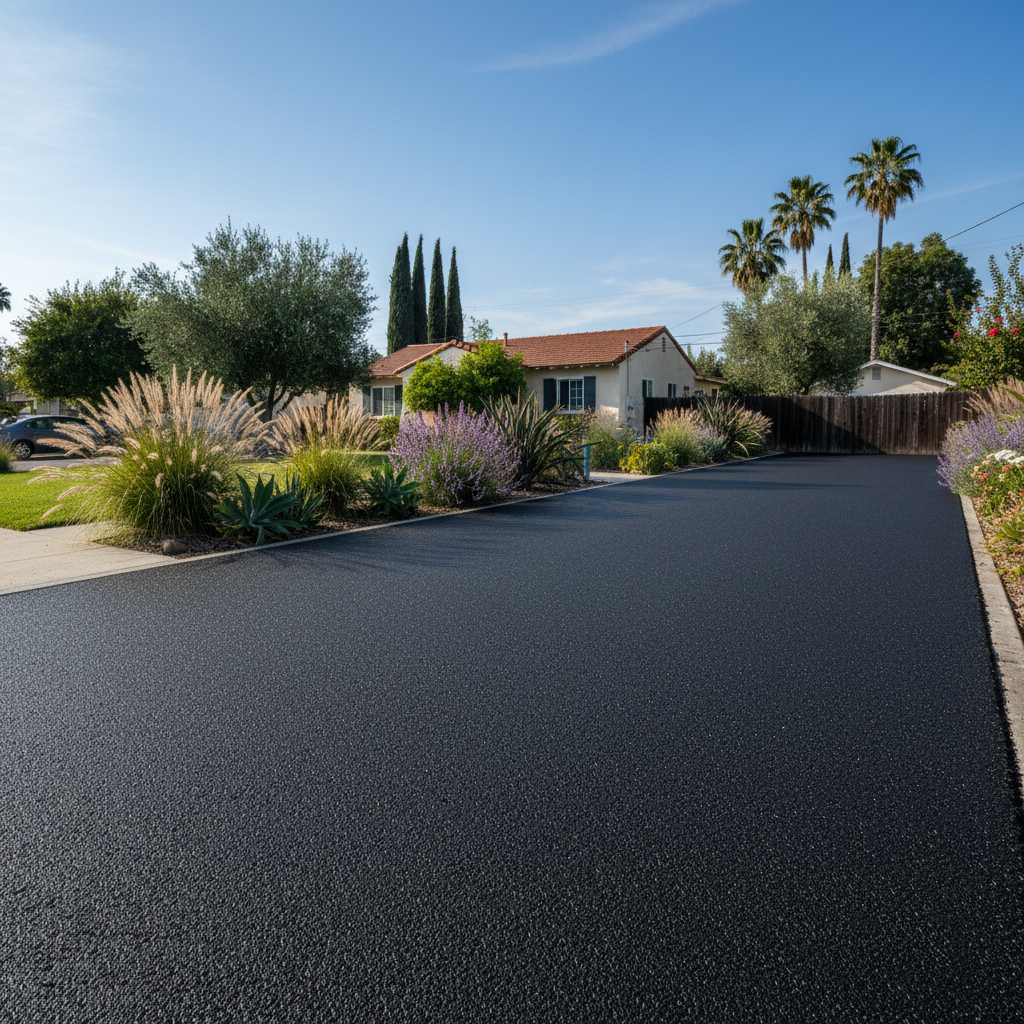
Alright, let's talk about money. Specifically, what it's gonna cost you to get a new asphalt driveway here in Los Angeles. I get calls every day from folks wanting a ballpark figure, and while it's tough to give one without seeing the job, I can definitely tell you what factors push the price up or down. You don't want to overpay, and I don't want you getting surprised by hidden fees. So, here's the deal.
What Affects Your Asphalt Driveway Price Tag?
When I'm putting together a quote for a new driveway, I'm looking at a few key things. These are the main drivers of cost:
- Size and Shape: This one's a no-brainer, right? A bigger driveway means more material and more labor. A simple rectangle is easier and cheaper than a winding, custom-shaped path with lots of curves. We measure by square footage, and that's your starting point.
- Existing Conditions & Prep Work: This is often the biggest variable. If you've got an old, cracked-up concrete driveway that needs to be completely demolished and hauled away, that's a significant cost. We're talking demo, debris removal, and then grading the sub-base. If your existing asphalt is mostly sound and just needs a fresh layer (an overlay), that's a lot less work. Sometimes, especially in areas like the Hollywood Hills where the soil can be a bit unstable, we might need extra grading or a thicker base layer to ensure a long-lasting job.
- Material Thickness: A standard residential driveway usually gets 2-3 inches of compacted asphalt. If you've got heavy vehicles, like an RV or a work truck, you might need 4 inches or more. More material means more cost.
- Drainage: Proper drainage is critical, especially with our occasional heavy rains here. If your property needs new drains, culverts, or grading to direct water away from your house and foundation, that's an additional expense. It's not optional, though; you want your driveway to last.
- Accessibility: Is your property easy to get to with our paving equipment? If we're hauling materials up a narrow, winding street in Silver Lake or dealing with limited space to maneuver our trucks, it adds time and complexity, which translates to cost.
- Permits: Depending on the scope of work and if we're touching public right-of-way, you might need city permits. We handle that for you, but the permit fees themselves are an added cost.
Typical Cost Ranges for Residential Asphalt in LA
Okay, let's get some numbers out there. Remember, these are rough estimates for Los Angeles, and your specific project could be higher or lower depending on those factors I just mentioned.
Generally, for a complete tear-out and replacement of an asphalt driveway, you're looking at about $5 to $9 per square foot. This includes demolition, hauling, grading, new base material, and 2-3 inches of new asphalt.
- A small, single-car driveway (around 200-300 sq ft) might run you $1,500 - $2,700.
- A standard two-car driveway (400-600 sq ft) could be in the range of $2,000 - $5,400.
- Larger driveways (700+ sq ft) can easily go from $3,500 up to $6,300+, depending on complexity.
If your existing asphalt is in decent shape and you just need an overlay (a new layer of asphalt on top), that's usually cheaper, around $2.50 to $4.50 per square foot.
Keep in mind these are for the paving itself. Any significant drainage work, retaining walls, or extensive landscaping changes will be additional.
What Should Be Included in Your Quote?
When you get a quote from me or any reputable paving company, it should be detailed. You shouldn't have to guess what you're paying for. Here's what a good quote from Pioneer Asphalt Co. or anyone else should cover:
- Demolition and Removal: If applicable, this should specify the type of existing material (asphalt, concrete) and how it will be removed and disposed of.
- Grading and Base Preparation: Details on how the sub-base will be prepared, including any new aggregate base material (e.g., 4-6 inches of compacted class 2 aggregate).
- Asphalt Application: The thickness of the asphalt layers (e.g., 2.5 inches of compacted asphalt).
- Compaction: How the asphalt will be compacted to ensure durability.
- Drainage: Any specific drainage solutions, like new culverts or grading.
- Cleanup: What kind of site cleanup you can expect after the job is done.
- Warranty: A clear statement of the warranty on materials and workmanship.
- Permits: Who is responsible for pulling necessary permits.
How to Avoid Getting Ripped Off
This is important. Don't just go with the cheapest bid. Here's what I tell my neighbors:
- Get Multiple Quotes: Always get at least three detailed quotes. This helps you compare apples to apples and understand the market rate for your specific job.
- Check References & Reviews: Look at online reviews (Yelp, Google) and ask for references. A good contractor will have plenty.
- Verify Licensing & Insurance: Make sure the contractor is licensed by the CSLB (Contractors State License Board) and fully insured. Ask for proof. You don't want liability if someone gets hurt on your property.
- Don't Pay Upfront: A reputable contractor won't ask for the full payment upfront. A reasonable deposit (usually 10-30%) is normal, with progress payments or final payment upon completion and your satisfaction.
- Get Everything in Writing: Every detail, every cost, every agreement should be in a written contract. No handshake deals for major home improvements.
- Ask Questions: If something in the quote isn't clear, ask. A good contractor will take the time to explain it to you.
A new asphalt driveway is a big investment in your home. Do your homework, ask the right questions, and you'll end up with a quality job that lasts for years. If you're in the LA area and need a hand, give Pioneer Asphalt Co. a call. We're always happy to talk through your options.