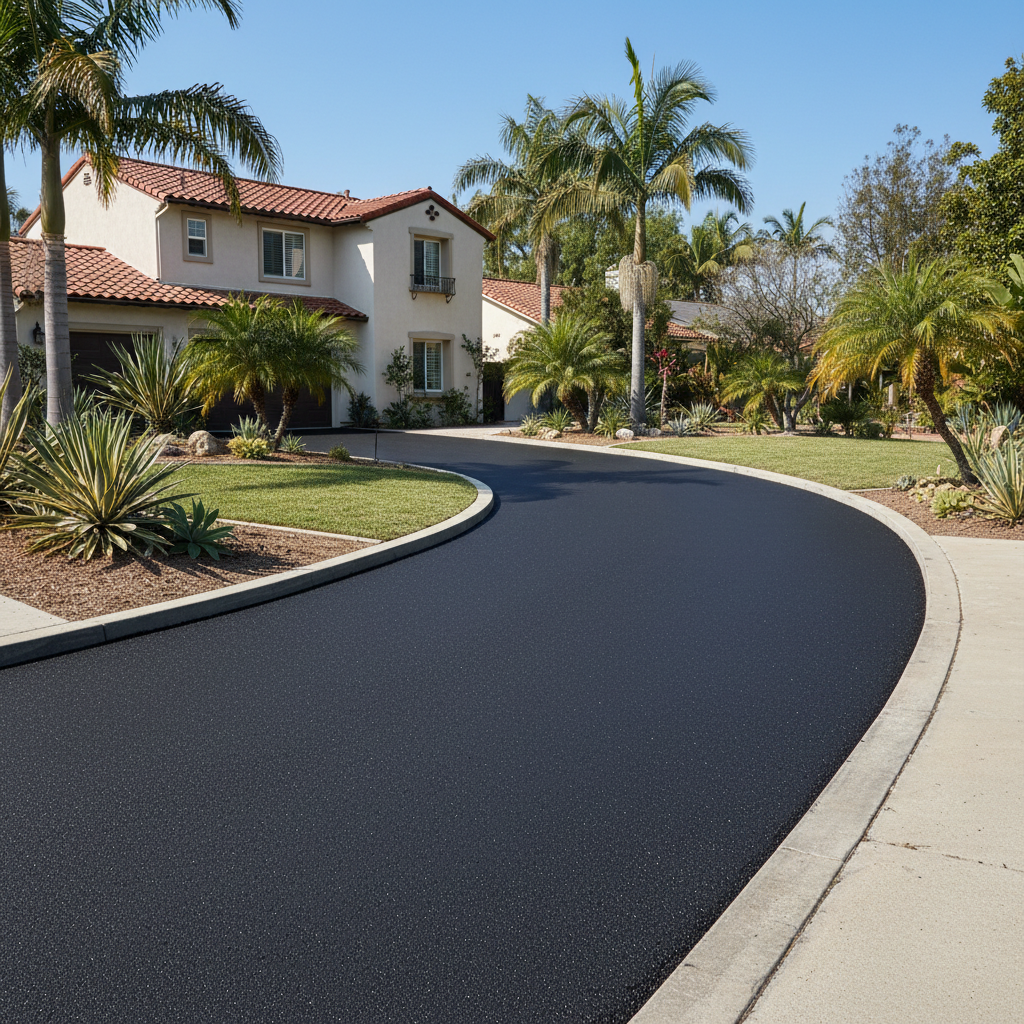
So, you're thinking about getting some asphalt work done around your house here in Los Angeles. Maybe it's a brand-new driveway, a little path to the backyard, or just finally fixing that old, cracked mess. You're probably asking yourself, "What's this whole thing going to cost me?" That's a fair question, and honestly, a lot of people just give you vague answers. I'm going to lay it out for you straight, based on what I see every day here at Pioneer Asphalt Co.
What Really Drives Asphalt Paving Costs?
Forget those online calculators that spit out a national average; they're pretty useless in a market like LA. Our labor costs are higher, getting materials around can be a real headache, and every single job is different. Here’s what actually makes your bill go up or down:
- Size and Shape: This one's kind of obvious, right? A bigger area means more material and more hours for the crew. But also, a really twisty, curvy driveway with lots of turns will cost more per square foot than a simple, straight rectangle. Think about it: more cuts, more handwork, more time.
- Existing Conditions: Is there old asphalt or concrete that needs to be ripped out and hauled away? Is the ground soft or uneven, meaning we'll need to do a lot of grading and put in a new aggregate base? Demolition and getting the site ready can easily add 20-40% to a project. If your soil is that heavy clay we often see in places like the San Fernando Valley, you might need extra work to make sure water drains properly and everything stays stable.
- Asphalt Thickness: Most residential driveways get 2 to 3 inches of compacted asphalt over a solid base. If you've got heavy vehicles, like an RV or a work truck, you might need 4 inches or even more. Thicker asphalt means more material, and yep, that means more cost.
- Accessibility: Can our equipment easily get right to the work area? If we have to hand-shovel asphalt from a truck parked down the street because your backyard is really tight, that's going to take longer and cost more in labor.
- Drainage Needs: Good drainage isn't just a nice-to-have; it's absolutely crucial to stop water damage and make your asphalt last. This could mean shaping the surface, putting in drains, or digging swales. Seriously, don't skimp here.
Typical Cost Ranges for Residential Asphalt in LA
Alright, let's talk actual numbers. For a standard residential asphalt paving job – and by that, I mean tearing out an existing asphalt driveway, proper grading, putting down a new aggregate base, and then 2-3 inches of fresh asphalt – you're generally looking at:
- Small Driveway (200-400 sq ft): Picture a single-car driveway. You might be in the range of $3,000 - $6,000.
- Medium Driveway (400-800 sq ft): This is your typical two-car driveway. Expect to pay $5,000 - $10,000.
- Large Driveway or Extensive Pathways (800+ sq ft): For bigger projects or more complex layouts, costs can jump from $9,000 to $20,000+.
These are just rough estimates, of course. For just an overlay (that's when we pave new asphalt directly over existing, stable asphalt), you could shave 20-30% off these figures. But that's only an option if the existing surface is in pretty decent shape, you know?
What Should Your Quote Include?
When you get a quote from a reputable contractor like Pioneer Asphalt Co., it shouldn't just be one number. It needs to be detailed. Here's what you want to see:
- Scope of Work: This should clearly state what's being done – demolition, grading, base material, asphalt layers (with thickness specified), and any drainage work.
- Materials: The type and amount of asphalt, aggregate base, and so on.
- Labor: Hours and crew size, though sometimes this is just rolled into the total project cost.
- Equipment: What machinery they'll be using.
- Permits: Who is responsible for pulling any necessary permits (usually the contractor handles this).
- Cleanup and Hauling: Confirmation that all debris will be removed from your property.
- Warranty: What kind of guarantee they offer on their work.
If a quote is just a single line item, be careful. You really need to know what you're paying for.
How to Avoid Overpaying (and Under-Delivering)
Getting a good deal isn't just about finding the lowest price; it's about getting quality work that actually lasts. Here are my tips:
- Get Multiple Bids: Always get at least three detailed quotes. This helps you compare apples to apples and figure out the market rate for your specific project.
- Check References and Reviews: Don't just take their word for it. Look at their past work, talk to previous clients, and check online reviews.
- Verify Licensing and Insurance: This is non-negotiable. Make sure they're licensed by the CSLB and fully insured. You definitely don't want to be liable if someone gets hurt on your property.
- Don't Rush: Be suspicious of contractors who pressure you into signing right away or offer huge, "today only" discounts. Quality work takes proper planning.
- Beware of Door-to-Door Sales: If someone knocks on your door claiming they have leftover asphalt from another job and can give you a deal, send them packing. It's almost always a scam that results in shoddy work and cheap materials.
- Ask About the Base: The base material underneath your asphalt is absolutely crucial. A good, compacted base prevents sinking and cracking. Make sure your contractor isn't cutting corners here.
Investing in a new asphalt surface is a big deal for your home. Do your homework, ask the right questions, and choose a contractor who truly cares about quality and being transparent. That's how you get a surface that looks good and holds up for years, even with our crazy LA traffic and those wild weather cycles.